
TERRITORYRUNNING
Every loop you close becomes ground you own.
A run usually ends the moment you stop moving. The distance goes into a logbook, the logbook goes into a folder, and by Thursday you could not say where you ran on Monday. Territory running works differently. What you covered stays on the map.
What territory running is
Territory running is any game where the shape of your route matters as much as the length of it. You are not only recording distance. You are enclosing ground, and the ground stays yours after you stop.
In CONQR the rule is simple. Walk or run a loop. When you close it, the app measures the area inside and adds it to your realm on the map. Do that again tomorrow, somewhere adjacent, and the two shapes join. After a few weeks the map stops looking like a set of routes and starts looking like a place you have taken over.
The loop is the unit, not the mile
This is the part that changes how you run. An out-and-back encloses nothing. You can cover six miles down a trail and back and finish with no new ground at all, while a two-mile loop around four blocks fills in a solid piece of your neighborhood.
So route choice becomes a decision rather than a habit. Which way around the park. Whether to cut back through the side streets to close the shape early, or push one block further and take the bigger area. None of it requires you to run faster. It requires you to look at the map before you leave.
Short loops count as much as long ones. A four-block loop on a tired Tuesday still claims ground.
Why a map beats a logbook
Most miles disappear. You log them, the number goes up, and the number means nothing three weeks later because a number is not a memory. A map is. You can look at a filled-in block and remember the morning it was raining, or the loop you took the long way around because you were not ready to go home yet.
Consistency is the thing that actually makes running work, and consistency is invisible by nature. Territory running is a way of making it visible. The map is a record of showing up, drawn in the shape of the place you live.
Ground you hold, and ground you contest
Claimed ground is not permanently yours. Local leaderboards show who holds the most territory on specific streets, which means the streets near you have a standing, and the standing can change. Someone else runs your block on Saturday and takes tiles back. You go and take them again.
This is deliberately small in scale. The competition that matters is not national. It is the handful of people who run the same park loop you do, which is a rivalry you can actually feel.
Where claiming is switched off
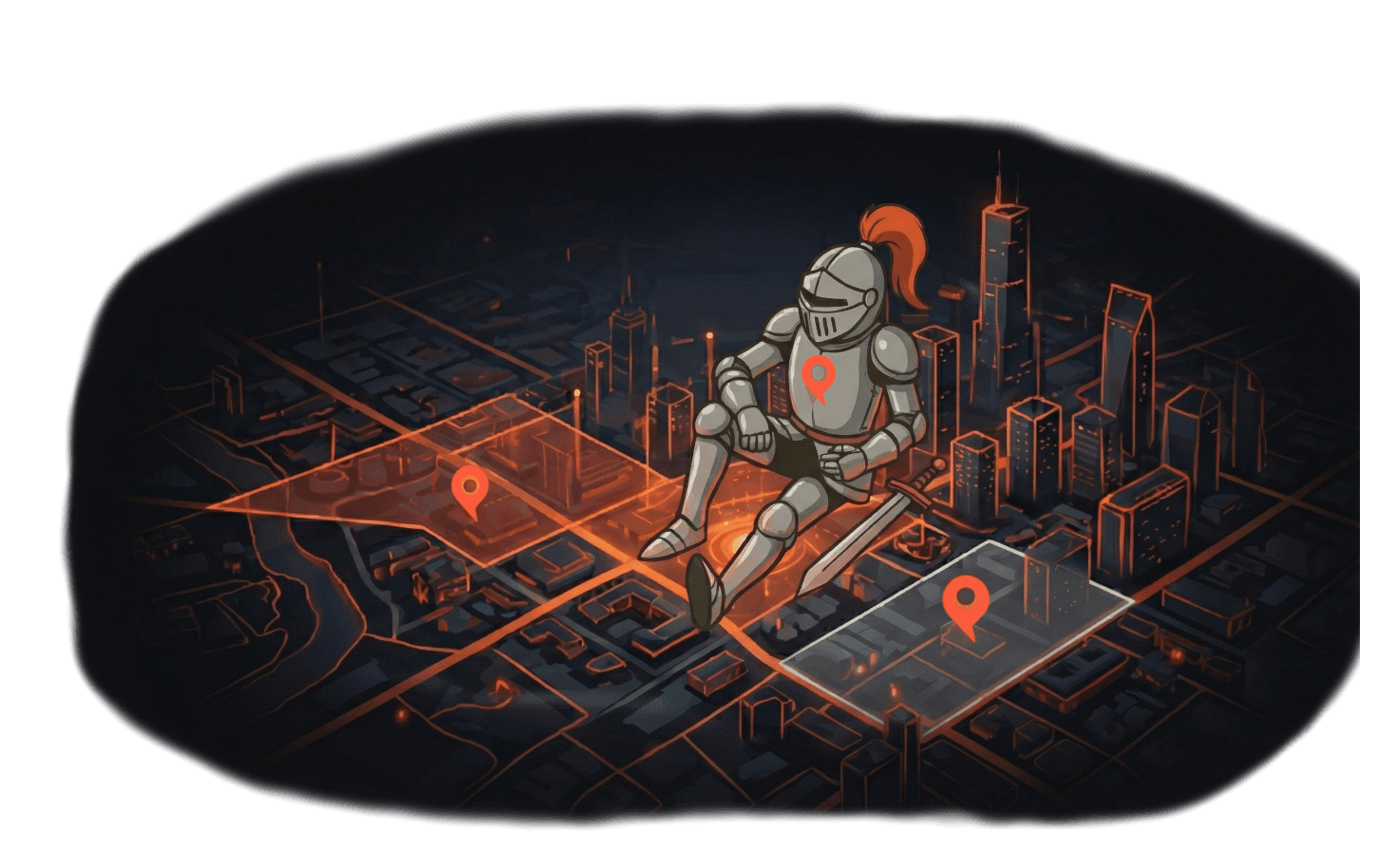
Some places are too busy to belong to anyone. The park loop, the waterfront path, the trail everyone in town already knows. Those become Battlegrounds, where territory capture is off and three teams compete on distance covered inside the boundary each week instead.
It is the same map and the same running, judged a different way. The places with the most traffic get a format that rewards traffic.
Does this show people where you live?
It is the first fair question about any territory game, because the mechanic runs on the one route you repeat most: the one starting at your front door. A map of claimed ground is, by construction, a map of where you spend time.
CONQR does not sell location data. Route privacy defaults and sharing controls decide what other players can see, and the location you give the app is used to run your map, your runs, and your stats rather than to feed anyone else. If you want the loop around your own block to stay yours alone, that is a setting, not a compromise you have to accept to play.
What you build alongside the map
Distance earns Coins. Milestones drop Gems. Every walk and run earns XP, and XP moves you through levels that unlock borders, boosts, and features. Leagues match you against players at a similar level so the competition stays fair, and full analytics — pace trends, splits, elevation, heart-rate zones, territory heatmaps — are there from day one rather than behind a subscription.
The map is the part you will show people. The rest is what keeps a week interesting once the novelty of the map wears off.
Common questions
What is a territory running app?
A running app where the route you take claims ground on a map, rather than only logging distance. In CONQR, closing a loop adds the area inside it to your realm.
Does an out-and-back run claim territory?
No. An out-and-back encloses no area, so it claims no ground. It still earns Coins, XP, and full analytics for the run — it just does not fill in the map.
Can other players take my territory?
Yes. Local leaderboards track who holds the most ground on specific streets, and tiles change hands as other players run the same blocks.
Do walks count, or only runs?
Walks count. The loop is what matters, not the pace you covered it at.
Is CONQR available to download?
Not yet. CONQR is pre-launch on iPhone, and the waitlist is how you get in first.
Claim your run.
CONQR is pre-launch on iPhone. The waitlist is how you get in first, and how you get the ground near you before anyone else does.
Join the waitlist